Wednesday, November 20, 2013

Week 9: The Common Themes of Directors


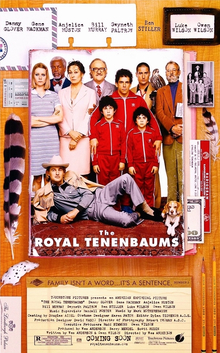
Wes Anderson is a man of many talents. He has been a director, producer, writer and even an actor to several films. This may not seem very impressible but considering he has done some of these together for some of his films I think that add to the level of his skill.

The 3 films I selected to watch of his were The Royal Tenenbaums, Fantastic Mr. Fox, and Moonrise Kingdom. After watching the first part of Moonrise Kingdom, I became interested enough to finish the movie on my own. Being able to watch some of his other movies seemed like a good idea.
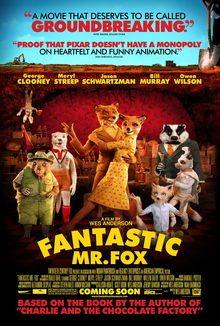
And it really was. I had heard about the movie the Fantastic Mr. Fox but hadn't had the motivation to actually see it even after hearing it was good from several friends. It was the same for Moonrise Kingdom thou I never had the motivation to watch that one ether. The only one I hadn't heard of before was The Royal Tenenbaums but considering that came out when I was only 9 years old I feel that’s explanatory.
Having watched all of these films now it seems he really likes to focus on a slice of life feeling. He focused on dramas involve the growing up of characters as they face roadblocks in their life. He also likes having a family connection as all of the films have a close family with very little focus on people outside of this inner circle.

His use of camera angle and point of view is some of the best I’ve seen in years. One example I can give is when Mr. Fox is robing the cold storage for one of farmers and we see the entire scene from the screens of security cameras. I find these odd placements of cameras prominent in many of his movies as well as almost a side scrolling view like in video games. It’s not the normal views we get currently in the movies.
Another thing found in all of his movies is the idea that he separates each part into chapters, parts that are labeled often visually on the screen. I read somewhere it feels like very much like a novel. His movies translate very much more to a visual adaptation of an actual book then a translation of a screenplay.
Wes develops characters at his own pace giving us just enough information at the beginning to give us an idea but then slowly giving more away s the movie goes on. Hints are given on what’s going on but nothing is finally revealed until the climax. He gives each of the characters their own quarks in nature that may seem strange to us. It is perfectly natural to the world they live in for the most part but they are still strange to everyone else.
So in all, I like his movies thou nothing I would watch normally.

Monday, November 11, 2013

Week 11: "You" and Me in the Wonderful World of Gameing


You, a novel by the game designer Austin Grossman, tells the story of Russell as he gets a job at Black Arts games not only for a paycheck but also to find about the death of a friend of his. It revolves around the gaming industry as told from someone who worked on multiple games himself and knows what he's talking about unlike others who have written the same thing. 

Was he more successful than others?

I don't particularly think so. As someone who has read others exploring video games as a setting for a story, I can't say this one stands out to me particularly well. It's probably a combination of things. I didn't particularly like Russell as a character. He seems like a jerk who thought himself to be high and mighty to many of the people he meets despite the fact he grows to like them. Even then he doesn't stand out much from the standard main character just coming off as annoying.

I think the biggest problem I have with books trying to use games as a setting is that video games are a visual medium. They are shown to us not with just words but moving pictures that we can control and progress at our own pace. We control how fast we get to one point or another. We control the main character. Its all something we can watch and not read admiring the creativity of others instead of coming up with the little details from our own imaginations.

In this case, I'm not sure I'll find any story about video games very interesting when I can just go play a game myself.

There is one video game story I do admit has been very successful and I enjoyed what little I've seen and read of the series is .hack//Sign. The series has had many incarnations of manga, anime, and games. It understands the idea of being inside a game and the world outside of it from the view of players.

I think I good reason I find this series better is not only because i found the story more compelling but the fact I enjoyed having to watch something instead of reading it. I had pictures to look at in the manga, animations to watch in the anime, and I got to play the game itself. Its this that I feel makes it have a step up over other novels trying to accomplish the same thing. Even with a few visuals could have all the difference.

Week 10: Stories of Our Time

( I only realized after writing this we were not required to write an entry for this week.)

Unlike some past weeks, I think this one particularly stood out to me.

I was much to young to remember the Columbine High School massacre. I was only in the 1st grade when it happened and I don't even remember hearing about it at the time. I couldn't even tell you if there were ever any security measures taken place at my school afterwards.

What I do remember is September 11th just two and a half years later. It had only been that short amount of time and I had gone into the 4th grade. But still I can remember it quite well like I'm sure many others can as well. This is the major event of our childhood like Columbine was for many others and I'm sure what Sandy Hook is to many kids now.

These events define much of who we are today. They have affected us all in a variety of ways, some of it hitting closer to home than others.

Just like September 11th, I remember Sandy Hook as well.

These short stories show us a different perspective to events one that doesn't come from the bias of television. In Newsworld, the teens try to find out where things have gone wrong, looking to the local amusement park for answers. They don't know what they will find breaking in but at the same time all they know is the mews media and how things seem. They hope that they will gave some incite from the park's sets of other past news.

After all, history tends to repeat itself. In the past 20 years, there have been a shocking amount of shootings at schools that is several times too many. There have been too many terrors from people who hate anyone who doesn't agree with their views. Its a terrifying time we live in in some ways.

Sunday, October 6, 2013

Week 6: Voice of our Generation


Our generation has seen changes that can't even be imagined by our parents or grandparents. The developments in technology have advanced so rapidly even our generation has trouble keeping up with the change with new products seemingly coming out weekly.
We are the generation that shifted into this new age where computers have replaced books and newspapers, where communication between countries can travel instantly, where its no longer hard to find out what's going on in other parts of the world. We are a generation focused on technology and social media. The Internet provides us with endless amounts of entertainment and information. With this, we grow up multitasking and also growing bored easily. Another curse of our generation is we have been desensitized from all the things we see in society or even on television. Growing up watching reruns of law and order or CSI can do that to a child’s mind. And also cause nightmares.
One of the biggest influences on our generation continues to be a big part of many lives. Harry Potter has crossed generations with its books, films, and other media but it's very close to our generation because we are the first ones who grew up with it. We have been there every step of the way, the books continued to come out as we grew up with the characters. We grew as they did. They are the ones who lead us into adulthood.
To be honest, I grew up with fantasy books focusing in other world rather than our own because I wanted to escape into them. I watched cartoons based on superheroes and magic. The TV shows that were realistic tended to be crime shows where they almost always caught the bad guy. I want to say that reflects a part of our generation that dreams and imagine of impossible things and gains these perspectives through the variety of different mediums at our grasps. But I know everyone doesn’t share this view. As said previously, with all the information at our fingertips its hard to narrow the list down to anything.

Tuesday, October 1, 2013

Week 5: The experience reading 'Girl in Landscape'


 Whether I liked the book 'Girl in Landscape' by Jonathan Lethem is irrelevant but I will say I did not with the writing being dull to read for the most part.
There, that's all that needed to be said on my opinion.

Getting to my experience on the book is a bit more hit and miss. I couldn't read the book in one sitting as I found myself reading pages over again to see what I might have skimmed over the first time. As a relatively fast reader I'm guilty of reading probably at minimum every other word in a story often skipping sentences in my haste. In this story its impossible to do so because skipping a sentence makes the next feel odd to read. It doesn't flow with the book like it should result in me having to reread it all over again, this time slower. It's an exhausting process and I just couldn't urge myself to finish the book in one go.
It was probably this constant need to repeatedly go to the library to pick up the book again that made the already slow pace drag out longer. The seemingly careless, throwaway dialogue at the beginning doesn't help as it provided the backgrounds of the characters and the world at a tooth pulling pace. To be honest when I read the back cover, knowing full well at the end the mother was going to die, I was expecting it to be much sooner. Instead it takes two chapters. Two very long chapters.
The rest of the book goes about along the same pace. There are parts where I'm generally interested in what’s going on Pella being sensibly girl at only 13. And then there are times where she seems almost freakishly mature. It’s rather off-putting how easily she can handle things becoming another thing I have to read back a few paragraphs just to make sure I read her actions right and that’s what she was really doing.
Nothing really caught my attention besides the idea of accumulation they talk about through out the book. The need to change to adapt to the environment is a very weird then but in the book it feels like something more. It was one of the few things that kept me going thought the book to see how this 13 year old and the people around her react to this new place and people.

Tuesday, September 17, 2013

Week 3: The Difference Between Words and Pictures

What do pictures add to a text?

What does text lose when there are gone?

There are pros and cons to having stories illustrated into comics. A story composed of just words is no less interesting than one acomanyed by pictures. With just words, the reader has to use their imagination to fill in the gaps the author leaves out, details that normally don't matter so much typically about the characters apperence or small details in the setting. Other details are flushed out such as backgrounds and plot while these more visual descriptions are expected to be flushed out with the readers thoughts and imagination.

Comics almost do the complete opposite. They strip a story down to the barest of words, only for dialogue and brief moments of visual information. The rest is the man words transformeded into pictures replacing sentences with panels of the comic.

Reading Tintin it was interesting to see how easily it could be transformed into a written novel in some ways and in others would fail miserably. The characterization we as readers get as soon as we see TIntin is on you might not realize at first. Tintin is the most normal looking of the many cast members with no real exagerations made to his character. At the same time how would you describe his apperence in words? A young man with strawberry blond hair and beady eyes? Thinking with that description in mind would you have come close to how he actually looks in the comics? Probably not. The stylization of the pictures adds a certin character that would normally be left out of a novel.


The first Tintin graphic novels can be a bit wordy, using an excessive amount of words for some dialogue or inner monologue. This changes as the artist and writer figures out how to visualize these thoughts thrust saving space on the page and giving panels a more open feeling. Over all the later Tintin books tend to be better in the long run as Hergé gets better himself. Still over all, Tintin's visualizations with its characters really make it hard for me to thing that it would have the same effect as a novel as it would as a comic.Sometimes there's just no substitute for images and the same goes for the other way around. I think your preference for a series can come from if you've read the novel first or the comic or in these days seen the movie first. The lovely part about media is that it has these multiple art forms to show you a story and in the end it doesn't really matter how you see or read it.

Sunday, September 8, 2013

Week 2: Literary work and The Great Gatsby


Literary work in the simplest terms is the art of written work. Literature actually means, ‘Things made from letters’.
Going a bit more in detail, literary work is imaginative or creative writing expressed in letters of the alphabet. That's a rather broad definition for a broad subject.
The UK makes defining literary work a bit easier as they have made it a part of copyright law since at least 1710. This copyright law defines literary work as ‘any work, other than a dramatic or musical work, which is written, spoken or sung’.
Many things can be classified as literary work even essays and poems as they are in fact ‘things made from letters’. Philosophical, historical, journalistic, and scientific writings are usually thought as literature as well.
With such a broad definition it seems like almost anything can be classified as a literary work of some kind or another. Even some comics could be considered as such as they use words for dialogue in most cases.
Now what does this have to do with he book, "The Great Gatsby"?
The Great Gatsby was a book written by American author F. Scott Fitzgerald in 1925. The book revolves around the mysterious millionaire Jay Gatsby and infatuation with Daisy Buchanan in the made-up town of West Egg on Long Island in the summer of 1922. It focuses on the relationships of the residents including Jay and Daisy told from the mouth of an outsider Nick Carraway. The book also helps provide a look into life during the Roaring Twenties giving glimpses of the evolution of jazz music, flapper culture, and bootlegging during prohibition.
Many would call the book a literary classic not to mention one of the greatest works of American literature for these looks into the past. But looking at the book its self does this make it literary work?
Yes, yes it does.